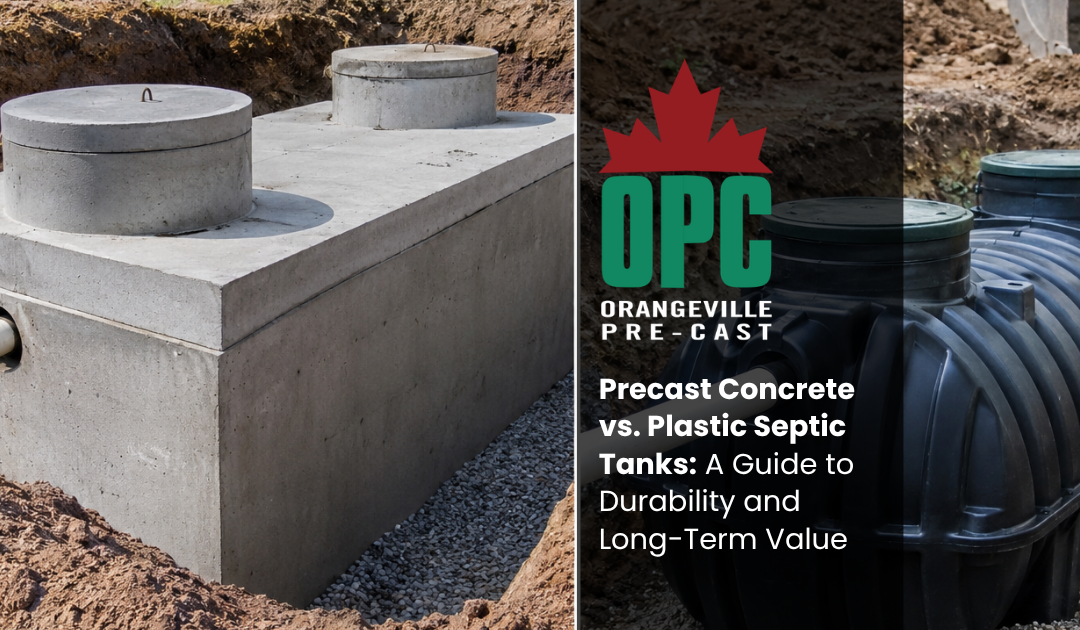
While plastic tanks offer initial conveniences, a deeper look at durability, lifespan, and structural integrity reveals a clear winner for those who prioritize long-term value and peace of mind. This guide provides an authoritative comparison to help you move past the surface-level sales pitch and make a confident, informed decision based on material science and real-world performance.
The Tale of Two Materials: What’s Really Under the Ground?
To understand which tank will serve you best, you need to look at how they are made and how they behave under the constant, immense pressure of the earth.
Precast Concrete: Engineered for Permanence
Precast concrete isn’t just a mix of sand and gravel. Modern tanks are highly engineered structures, manufactured in a controlled factory setting to meet rigorous industry standards like ASTM C1227.
- Material science: High-strength, low-permeability concrete is poured into steel moulds containing a reinforcement grid of steel rebar. This creates a monolithic, incredibly strong structure that acts as a single, solid unit. The controlled curing process ensures the concrete reaches maximum hardness and durability before it even leaves the plant.
- Proven lifespan: With proper installation and maintenance, a precast concrete septic tank has a typical lifespan of 40 to 50 years or more. Many last far longer, providing multi-generational service.
- Inherent strength: Its immense weight and structural rigidity make it naturally resistant to the forces that plague other materials. It won’t pop out of the ground in high water tables (buoyancy), and it can easily withstand the pressure of surrounding soil and the weight of vehicle traffic above. This is why engineers and seasoned installers often default to concrete for reliability.
Plastic (HDPE): Convenience with Compromises
Plastic, or High-Density Polyethylene (HDPE), tanks are lightweight and easier to transport, which is their main selling point. However, this flexibility comes with significant structural trade-offs.
- Material science: Plastic tanks are moulded from polyethylene. While resistant to many chemicals, the material’s inherent flexibility makes it vulnerable to external pressures.
- Limited lifespan: The expected service life for a plastic tank is generally 20 to 40 years. This lifespan can be shortened by installation errors, soil conditions, or damage during backfilling.
- Structural vulnerabilities: Plastic tanks are susceptible to deformation under the weight of soil, which can lead to cracks. They are also incredibly buoyant. In areas with high water tables, an empty or partially empty plastic tank can literally “float” or pop out of the ground, causing catastrophic failure of the entire system. They are also easily damaged by the weight of vehicles, limiting where they can be installed on a property.
Head-to-Head Comparison: Concrete vs. Plastic
For those who appreciate a direct comparison, this table breaks down the key decision-making factors.
| Feature | Precast Concrete | Plastic (HDPE) | The Bottom Line |
|---|---|---|---|
| Average Lifespan | 40-50+ years | 20-40 years | Concrete is a multi-generational investment. |
| Structural Integrity | Extremely high; resists soil and vehicle pressure. | Low; susceptible to crushing and deformation. | Concrete provides superior protection against collapse. |
| Buoyancy Risk | Virtually none due to immense weight. | High risk in wet soil or high water tables. | Concrete stays put, eliminating the risk of “floating.” |
| Installation | Requires heavy machinery; less room for error. | Lighter and easier to handle; highly sensitive to proper backfilling. | While more intensive, concrete installation is more foolproof. |
| Chemical Resistance | Highly resistant to household chemicals and sewage gases. | Generally good, but can be susceptible to certain hydrocarbons. | Both perform well, but concrete’s structure is more robust. |
| Environmental Impact | Inert material, prevents leaks. Made from local resources. | Lighter to transport, but a petroleum product. Leaks are a risk. | Concrete’s longevity and leak prevention offer greater long-term environmental security. |
| Long-Term Cost | Higher initial cost, but minimal long-term risk. | Lower initial cost, but higher risk of costly repairs or replacement. | Concrete offers a lower total cost of ownership over its lifespan. |
Beyond the Basics: The Overlooked Factors in Your Decision
The spec sheet only tells part of the story. The real difference emerges when you consider the lifetime cost of ownership, environmental responsibility, and suitability for your specific property.
The True Cost of a Septic System
It’s tempting to focus on the initial purchase price, but that’s a rookie mistake. The true financial picture includes installation, maintenance, and the potential cost of failure. A plastic tank might save you a little upfront, but a single failure, a collapse from soil pressure or a “floated” tank after a heavy rain, can cost tens of thousands of dollars to excavate, replace, and restore your landscaping.
Precast concrete’s higher initial investment is, in reality, a form of insurance against these catastrophic, high-cost failures. It’s an investment in predictability.
Site Suitability and Future-Proofing
Your property’s conditions should dictate your choice. For many Canadian sites dealing with frost heave, heavy clay soil, or high water tables, precast concrete isn’t just a better option, it’s the only responsible one.
Furthermore, consider the future. Do you plan to build a shed, a driveway, or a workshop? With a precast concrete tank, you have far more flexibility for future property development because you don’t have to worry about crushing the tank with vehicle traffic. This robust foundation makes your entire property more adaptable. When you’re sourcing materials, you need confidence in their longevity, whether it’s for buried infrastructure or visible features like innovative solutions for landscape projects.
Frequently Asked Questions
Decision-makers often ask the same critical questions. Here are the straight answers.
Is a plastic tank just as good if installed perfectly?
Even a perfect installation cannot change the inherent properties of the material. While proper backfilling with specific materials can help, the plastic tank itself remains vulnerable to shifting soil pressures and buoyancy. The risk of failure is permanently higher.
Can’t you just anchor a plastic tank down?
Yes, installers often use concrete “deadmen” anchors or pour a concrete collar to try and hold a plastic tank down. At this point, you have to ask yourself why you’re spending extra money on concrete to solve a problem that a concrete tank doesn’t have in the first place.
Don’t concrete tanks crack?
When manufactured to NPCA standards in a controlled environment, precast concrete tanks are exceptionally resistant to cracking. The steel reinforcement provides immense tensile strength, and the material is designed to handle ground and water pressure. Issues typically arise from substandard, pour-in-place tanks, not high-quality precast models. When you choose a reputable supplier, you are getting one of their expertly manufactured high-quality septic and holding tanks.
The Final Verdict: Invest in Confidence
Your septic system is not the place to cut corners. While a plastic tank may seem like a convenient and cheaper option initially, the risks of structural failure, limited lifespan, and costly replacement make it a gamble.
A precast concrete septic tank is an investment in certainty. It offers unmatched durability, a multi-generational lifespan, and the resilience to handle whatever your property’s conditions throw at it. By choosing concrete, you are not just buying a tank; you are buying decades of reliable service and the peace of mind that comes with a truly permanent solution.
Have questions about sizing or accessories for your build? Contact the Orangeville Pre-cast team and we’ll walk you through the options.